
For me personally, I welcome the change. Why? Because the name PCOS put too much emphasis on the ovarian cysts, which may or may not be present and not on the real problem: Metabolic syndrome. Let me explain:
You can have PCOS/PMOS without having polycystic ovaries. And, you can have polycystic ovaries without having PCOS/PMOS. This often-confused women who would come back with the results of an ultrasound done for something else and the radiologist has happened to notice cysts on the ovaries. These women might use Dr Google and conclude that they have the syndrome. Or I might explain to a woman that she has PCOS and she doesn’t understand why because she does NOT have polycystic ovaries.
What are the signs of polyendocrine metabolic ovarian syndrome?
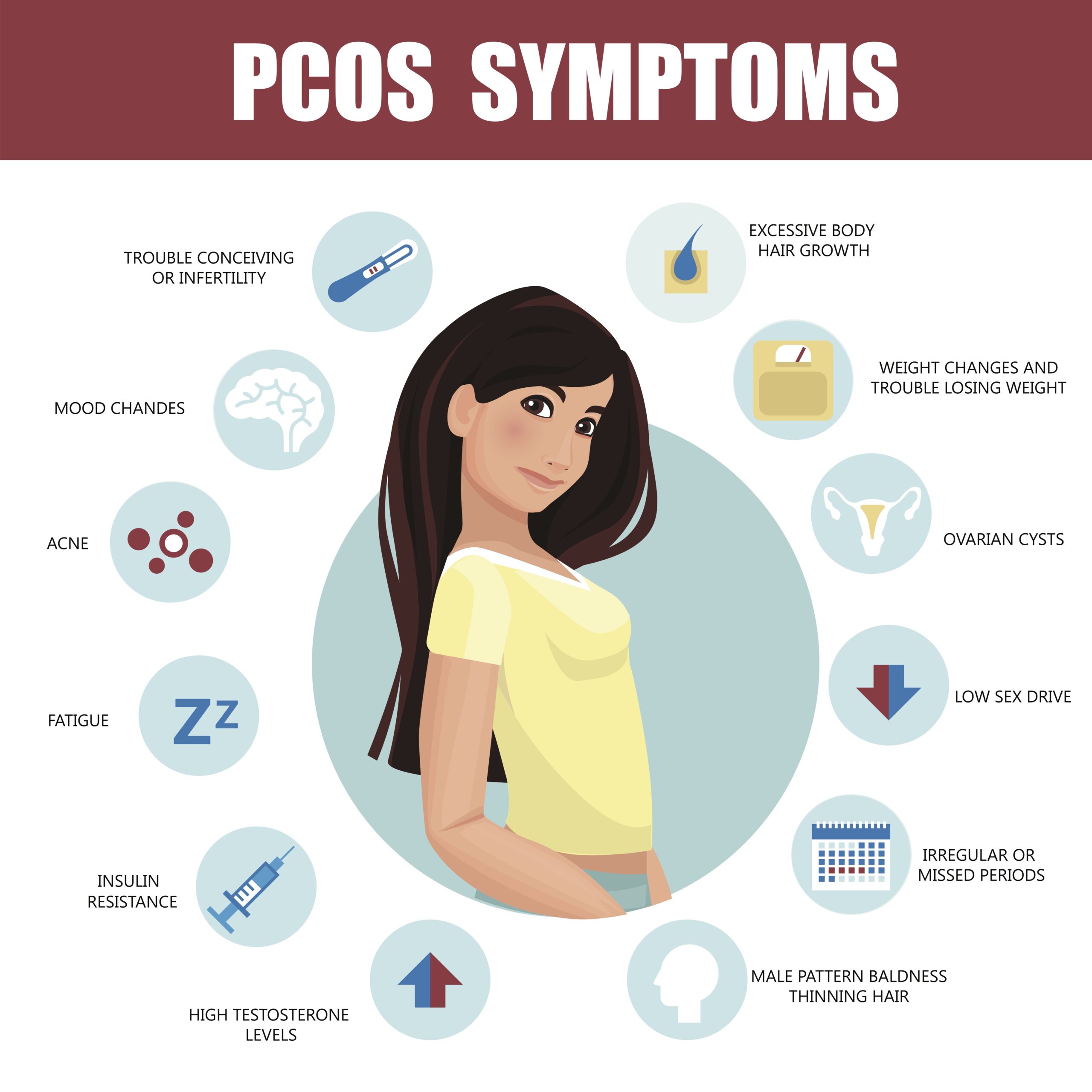
It is a constellation of symptoms including increased weight, acne, male pattern hair growth and sometimes few or absent periods and sometimes infertility. It is a spectrum of disease so some women may have some but not all of these things. The central theme is of Insulin resistance which affects ovarian function causing excess male hormone production and sometimes cysts on the ovaries.
The Rotterdam criteria for diagnosis PCOS /PMOS requires 2 out of three of the following:
1. Few or absent periods
2.Polycystic ovaries
3.Clinical evidence of excess make hormones. This might be acne or male pattern hair growth, or evidence of excess male hormone on a blood test.
Therefore, you can see that it is quite possible to have PMOS without having cysts and vice versa.
What are the Complications of Polyendocrine metabolic ovarian syndrome?
What’s really important about PMOS is the Metabolic impact it has on the whole body. The clue is now in the title.
Women with PMOS tend to hold onto their weight more than women who do not have PMOS. This increases insulin resistance and increases the risk of Type 2 diabetes. The Insulin resistance has an effect on Ovulation and multiple immature cysts tend to form in the ovaries in a particular number and pattern. These often contain immature eggs which are not ovulated properly, hence an effect on fertility and Menstrual patterns. Annoyingly it is weight loss, the very thing that some women with PMOS struggle with that can break this pattern and improve ovarian function and Insulin resistance.
Another important thing about PMOS is that if women are having fewer than 3-4 periods a year this increases their risk of Womb or endometrial cancer. Why? Let me back track. Most women ovulate once a month. In the run up to ovulation the womb lining gets thicker in case that egg is fertilised by a sperm and a resulting pregnancy needs to implant in the womb. However, if a woman does not become pregnant, the lining is shed and seen externally as a period. If women with PMOS are not ovulating normally, then they may not have the womb lining shed as a period. Hence few or absent periods. The lining just gets thicker and thicker and this can increase the risk of womb cancer.
Being overweight ALSO further increases the risk of womb cancer.
What are the Treatments for Polyendocrine Metabolic Ovarian Syndrome?
Weight loss helps with all of these things. Easier said than done for some women. So why would this be more common in Women of Afro-Caribbean and East Indian descent? There is a theory (which has not been proven) that many generations ago when food was scarce and starvation was likely, it was the women who COULD hold on to their weight that would survive the famine and go on to produce children. Interestingly, when women with PMOS lose weight, this helps their Insulin resistance and increases their likelihood of ovulation. So, in a famine, they were more likely to still ovulate than a woman who did not have PCOS and would STOP ovulating when food was scarce!
Luckily, we do have a fabulous Dietician here at the clinic who has an interest in PMOS and weight loss. There are also more specific treatments for the abnormal hair growth, acne and periods too. Certain combined hormonal pills can help acne and periods. Sometimes progesterone can be given every 3 months to induce bleeding more regularly. Hair removal creams and laser treatment can help with unwanted hair growth.